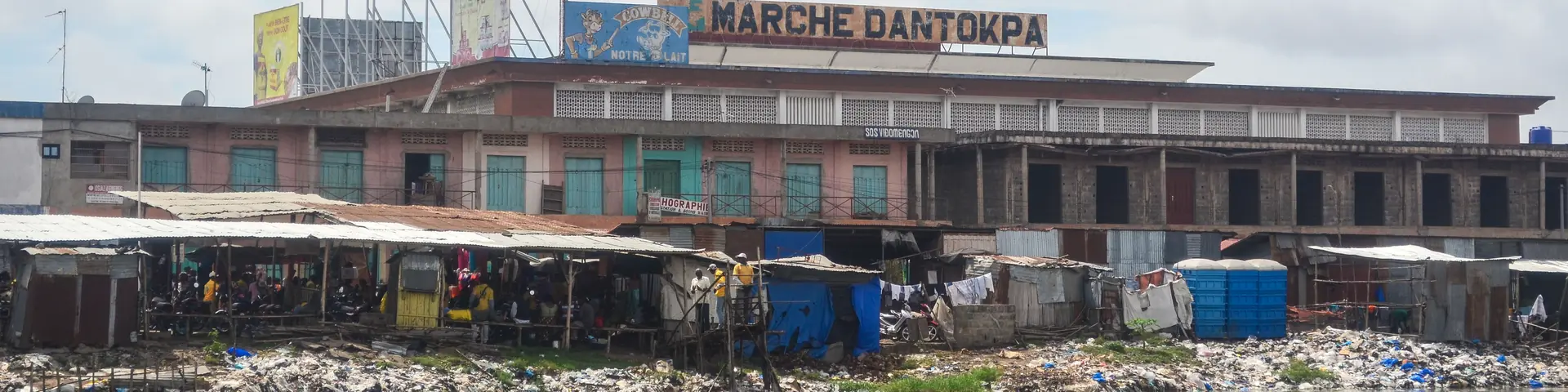
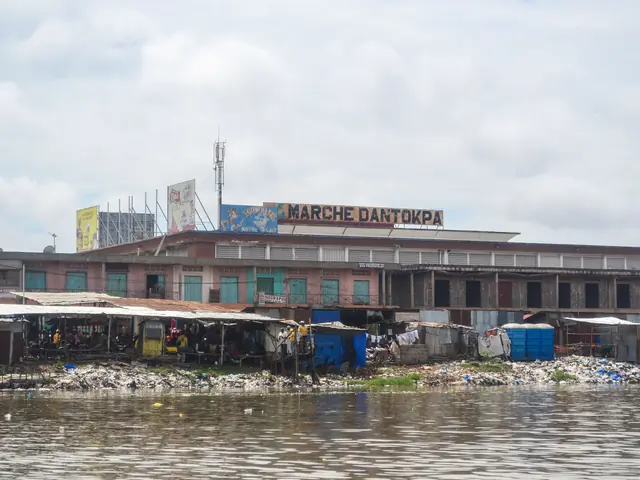
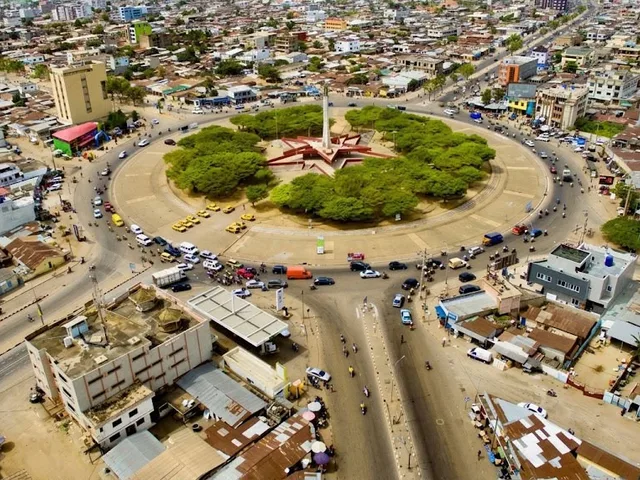
Le marché Dantokpa à Cotonou
©

The Dantokpa Market in Cotonou

|

Wikimedia Commons

The riches of the coastline

Dantokpa, the market that’s moving

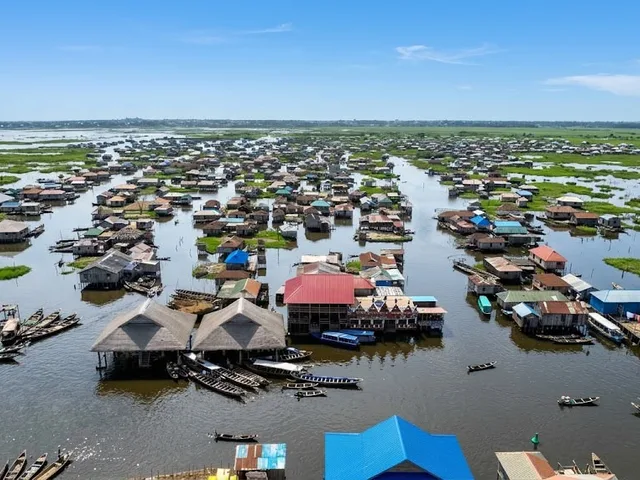
Benin stretches from the Gulf of Guinea to the Atacora Hills. From the royal palaces of Abomey to the lakeside town of Ganvié and the World Heritage-listed parks in the north, the country boasts a diversity rarely found in West Africa within its compact territory.

For sixty years, Benin’s largest market covered around twenty hectares on the banks of the Cotonou waterway. Since 2026, its traders have been moving to new sites. What you need to know before you go.

The waterfront market

Dantokpa developed on the banks of the Cotonou Channel, the stretch of water that connects Lake Nokoué to the ocean and divides the city in two. The name is read in Fon: ‘tokpa’ refers to the water’s edge, and tradition associates it with ‘Dan’, a serpent deity linked to prosperity. This interpretation is based on local custom, not on any archival document.

As for the size, the figures do not add up. A FAO survey on food distribution in Cotonou puts the figure at over twenty hectares. Recent reports cite 18.7 ha, whilst the Beninese press puts it at 19 ha. Bear in mind the order of magnitude: around twenty hectares, or an entire neighbourhood.

The number of traders is even more uncertain, in the absence of a comprehensive public census. In 2026, the public agency ANaGeM counted around 2,000 registered traders in just four sectors, amounting to around 4,000 active traders when sub-tenants are included. The most telling figure remains that from the FAO: around 70 per cent of traders at Cotonou’s other markets sourced their goods from Dantokpa.

Areas organised by trade

The apparent disorder is, in fact, a form of organisation. Foodstuffs on one side – maize, gari, yams, chillies, smoked fish; hardware and spare parts on the other; then second-hand clothes, cosmetics, jewellery and basketry. You find your way around by sector, not by address.

The loincloth is at the heart of it all. Wax fabric wholesalers – mostly women – are known as ‘Mama Benz’ in Benin, a reference to the ‘Nana Benz’ of Lomé, a nickname derived from the Mercedes cars they used to drive. Their dominant position was particularly strong between the 1960s and 1980s; competition from Asian fabrics has since eroded it.

One section sells items used in religious rituals: plants, bark, powders, kaolin, statuettes. It is not a cabinet of curiosities. These products are used by vodun priests, Fa diviners and for medicinal purposes: people come here just as they would go to a chemist’s. Looking around, yes. Taking photographs without permission, no. Buying an object whose purpose you do not know, no either.

2026: the end of the historic market

The relocation, first announced back in 2018, is now a reality. The move is scheduled to take place from 13 April to 2 May 2026, with the market set to close on 2 May. There are three destinations: Tokpa Yôyô, at the Kouhounou retail hub; Tokpa Daho, the Akassato wholesale market and Abomey-Calavi, covering 168 hectares; and the Ouando market in Porto-Novo. Vendors selling plants and recycled goods have been directed to a temporary site in Godomey-Gare.

The timetable has been pushed back several times. In early June 2026, the Beninese press was still reporting activity on site and 1,400 available stalls for around 4,000 traders. In other words: the situation is changing. Check with your accommodation provider or guide to confirm the site’s current status before setting off.

As for staying alert, the rule is the same as in any crowded place: no open rucksacks, keep your mobile phone in a front pocket, and keep small notes in a separate pocket. Pickpocketing does occur, but assaults are rare. When taking photos, ask first; if someone says no, respect their decision and do not insist.

Le marché Dantokpa à Cotonou
©

The Dantokpa Market in Cotonou

|

Wikimedia Commons

Le pagne béninois
©

The Beninese loincloth

|

Wikimedia Commons

Une rue de Cotonou
©

A street in Cotonou

|

Fawaz.tairou / CC BY-SA 4.0 — Wikimedia Commons

In practice

  • In Cotonou, in the Littoral department, on the western bank of the channel linking Lake Nokoué to the ocean
  • To get there from the centre of Cotonou, it’s a few minutes by taxi or zémidjan – just ask for Tokpa. For the new sites: Kouhounou and Akassato, on the Abomey-Calavi road
  • Allow between one and a half and two hours with a guide; allow more time if you want to buy some fabric
  • Best time to visit: the dry season, from November to February; in the morning between 7 am and 10 am, before the heat and the crowds
  • Good to know: check the day before to see which site is actually open. Cotonou’s retail landscape changed in 2026.